

Pokemon Card Phone Case: The Complete Buyer's Guide for TCG Collectors
You've spent hours hunting down that holographic Charizard, carefully sleeved it, and stored it in a binder — only to leave it sitting on a shelf where nobody, including you, gets to enjoy it every day. Sound familiar? A Pokemon card phone case changes that equation entirely. It turns your most prized card into a daily carry conversation piece, a wearable flex, and a functional phone protector all at once.
But not all card display cases are created equal. The market is flooded with cheap, yellowing plastic shells that will cloud over in three months and leave your precious Charizard looking like it's been stored in a smoker's attic. This guide cuts through the noise. Whether you're a competitive player, a graded card investor, or a casual collector who just loves the art, we'll walk you through everything you need to know to find the perfect trading card phone case — one that actually protects your card, your phone, and your investment.
By the end of this guide, you'll know exactly what to look for, what to avoid, and why [SuprPetrix's card display phone cases](https://suprpetrix.com/collections/phone-cases) have become the go-to choice for serious TCG collectors across the United States.
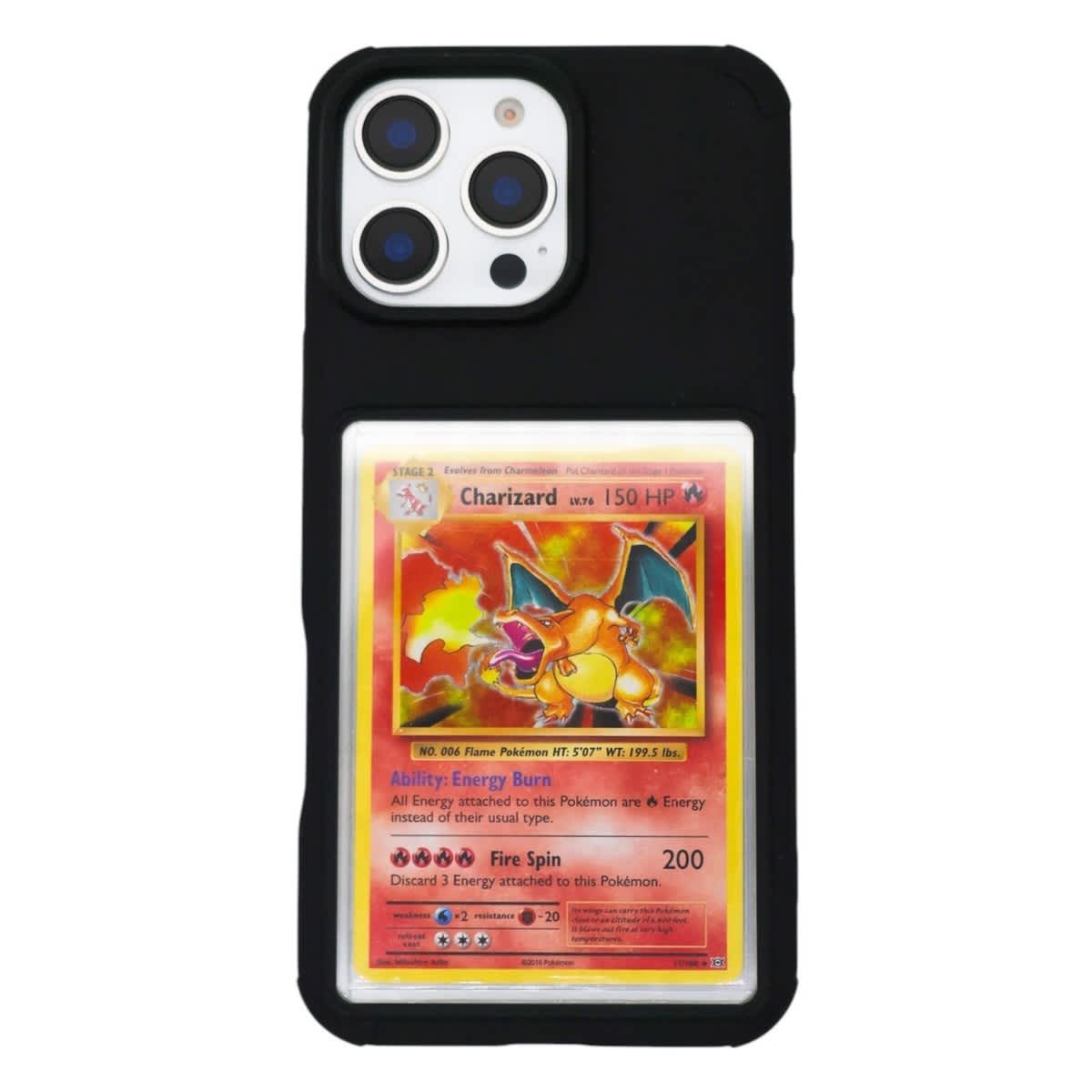
What Is a Pokemon Card Phone Case and Why Do Collectors Love It?
Before we dive into the buying checklist, let's get grounded. A card display phone case is exactly what it sounds like — a phone case engineered with a transparent window or slot on the back that holds a standard trading card securely in place, allowing you to swap cards in and out while keeping both your phone and your card protected. But the cultural phenomenon behind why collectors love them? That's a much richer story.
From Binder to Phone — The Rise of Card Display Cases
The trading card hobby has undergone a seismic shift over the past decade. What was once a childhood pastime became a full-blown investment culture, a social media aesthetic, and a lifestyle identity. The 2020 Pokemon TCG boom — driven by YouTubers opening vintage packs, celebrity collectors like Logan Paul flashing million-dollar cards, and pandemic-era nostalgia — didn't just spike card prices. It fundamentally changed how collectors think about displaying their collections.
Binders and toploaders are great for storage and protection, but they're invisible to the world. Framed card displays look great on a wall, but they're static and inaccessible. Collectors started asking a simple question: *what if I could carry my favorite card with me everywhere?*
That's the origin story of the Pokemon card phone case. Early versions were DIY hacks — collectors would tape cards behind clear cases or use generic card holder wallets. The results were predictably bad: cards shifted, cases cracked, and the yellowing plastic turned crystal-clear displays into murky yellow windows within months.
The demand was real, but the product quality wasn't there yet. That gap in the market is precisely what drove the development of purpose-built, collector-grade card display cases with features like UV-resistant materials, precision card slots, and reinforced corner protection. Today, the category has matured into a legitimate segment of the TCG accessories market, with dedicated brands engineering cases specifically for the needs of serious collectors.
The rise of TikTok and Instagram also played a massive role. Showing off your card collection used to mean posting photos of your binder. Now, it means showing off what's in your case — a living, rotating gallery that travels with you. Every time you pull out your phone at a local game store, a Pokemon Go raid, or a card show, your case is a statement. It says something about who you are as a collector.
Who's Buying? — The TCG Collector Profile
Understanding who buys trading card phone cases helps explain why the quality bar matters so much. The primary buyers aren't casual fans picking up a novelty item. They're invested — emotionally and financially — in their cards.
The core demographic skews 18 to 35, predominantly male but with a rapidly growing female collector base, concentrated in the United States but with strong pockets in Canada, Australia, and the UK. These are people who know the difference between a PSA 9 and a PSA 10. They understand that a card's condition directly affects its value. They're not going to put a $200 holographic rare into a case that might scratch, bend, or yellow-stain it.
Within this group, you'll find several distinct buyer personas: - The Art Appreciator: Drawn to Pokemon TCG primarily for the incredible card artwork. They rotate cards seasonally, matching their case to current favorite illustrations from sets like Scarlet & Violet or the classic Base Set era. - The Competitive Player: Attends local game store tournaments and Regional Championships. Their card case is part of their player identity — they might display their signature card, their team's mascot, or a card that represents their playstyle. - The Investor/Grader: Treats cards as financial assets. They're extremely protective of condition and will only use a case that demonstrably cannot damage a card. Anti-yellowing technology is non-negotiable for this group. - The Nostalgic Collector: Grew up with Pokemon in the late '90s and early 2000s and is now reconnecting with the hobby as an adult with disposable income. They want to carry a piece of their childhood everywhere. - The Gift Buyer: Parents, partners, and friends of collectors who want to give something meaningful and practical. A high-quality card display case is the perfect gift for someone who already has every card sleeve and binder on the market.
What all these personas share is an expectation of quality. When you're carrying a card that might be worth $50, $500, or $5,000, the case protecting it needs to be engineered to a standard that matches that value. That's why the features we're about to cover aren't just nice-to-haves — they're essential.
How to Choose the Best Pokemon Card Phone Case (5 Must-Check Factors)
Shopping for a pokemon card phone case without a checklist is like buying a card without checking its condition — you're going to end up disappointed. Here are the five factors that separate a collector-grade case from a cheap novelty item.
Card Fit — Standard TCG Size Compatibility
This seems obvious, but it's where a surprising number of cases fail. Standard Pokemon TCG cards measure 63mm x 88mm (approximately 2.5" x 3.5"). This is the same dimension used by Magic: The Gathering, many Yu-Gi-Oh cards (which are slightly smaller at 59mm x 86mm), and most modern sports cards. A well-engineered card display phone case should accommodate standard TCG sizing with a snug but non-damaging fit.
What you want to avoid: - Slots that are too tight: Forcing a card in and out repeatedly will cause edge wear, corner dings, and whitening — the kind of damage that drops a card from PSA 10 to PSA 8 territory. - Slots that are too loose: Cards that shift around inside the case will vibrate against the plastic, causing micro-scratches on the surface over time. They also look sloppy and unprofessional. - Cases without sleeve compatibility: Many collectors sleeve their cards before displaying them. A quality case should be able to accommodate a standard penny sleeve or soft sleeve, giving you an extra layer of protection without compromising the fit.
The ideal card slot has a tolerance of approximately 0.5mm to 1mm around the card — enough to slide in and out smoothly without any rattling. Look for cases that specifically mention "standard TCG card size" in their product descriptions, and be skeptical of generic cases that don't address card sizing at all.
Also consider the depth of the card slot. The card should sit flush against the transparent back panel, not float in a deep cavity. Floating cards look cheap and are more prone to movement damage. A flush fit maximizes the visual display effect and keeps the card stable.
Clarity & Anti-Yellowing — The #1 Quality Indicator
Here's the dirty secret of the cheap trading card phone case market: most of them are made from standard PC (polycarbonate) or low-grade TPU (thermoplastic polyurethane) that begins oxidizing and yellowing within weeks of regular use. UV exposure from sunlight, heat from your pocket, and the natural oils from your hands all accelerate this process. Within three to six months, that crystal-clear window turns the color of old newspaper, and your beautiful holographic card looks like it's been laminated in amber.
Anti-yellowing technology is the single most important quality indicator for a card display case, and it's where SuprPetrix has pioneered the standard in the collector market. The key is the material formulation. High-quality anti-yellowing cases use specially compounded TPU or polycarbonate blends with UV stabilizers and antioxidant additives built into the material at a molecular level. This isn't a coating that wears off — it's intrinsic to the plastic itself.
When evaluating anti-yellowing claims, ask these questions: - Does the brand specify a timeframe? Vague claims like "stays clear" mean nothing. Look for specific guarantees — SuprPetrix, for example, backs their cases with a "Crystal Clear for 12+ Months" standard, which is a measurable, accountable commitment. - What material is used? Look for cases that specify UV-resistant or UV-stabilized materials. If a product listing doesn't mention the material at all, that's a red flag. - Are there long-term user reviews? Check reviews from customers who have been using the case for six months or more. If the reviews are all recent, you can't assess long-term clarity performance.
Beyond yellowing, clarity itself matters. The optical clarity of the transparent panel determines how vibrant and true-to-life your card looks.
Low-grade plastics have a slight haze or blue tint that mutes colors and reduces the visual impact of holographic foil. Premium optical-grade materials maintain color accuracy and allow the full spectrum of the card's artwork to shine through.
For Pokemon collectors specifically, this matters enormously. The holographic foil on a Rainbow Rare or a Full Art Trainer card is a major part of its appeal and value. A slightly hazy case turns that iridescent sparkle into a dull shimmer. Crystal-clear, optically pure plastic is the only way to do justice to the artwork you're displaying.
Phone Model Compatibility — iPhone, Samsung & Beyond
A card display case that fits your card perfectly but doesn't fit your phone is useless. Phone model compatibility is a fundamental requirement, and it's more complex than it might seem because the smartphone market is highly fragmented.
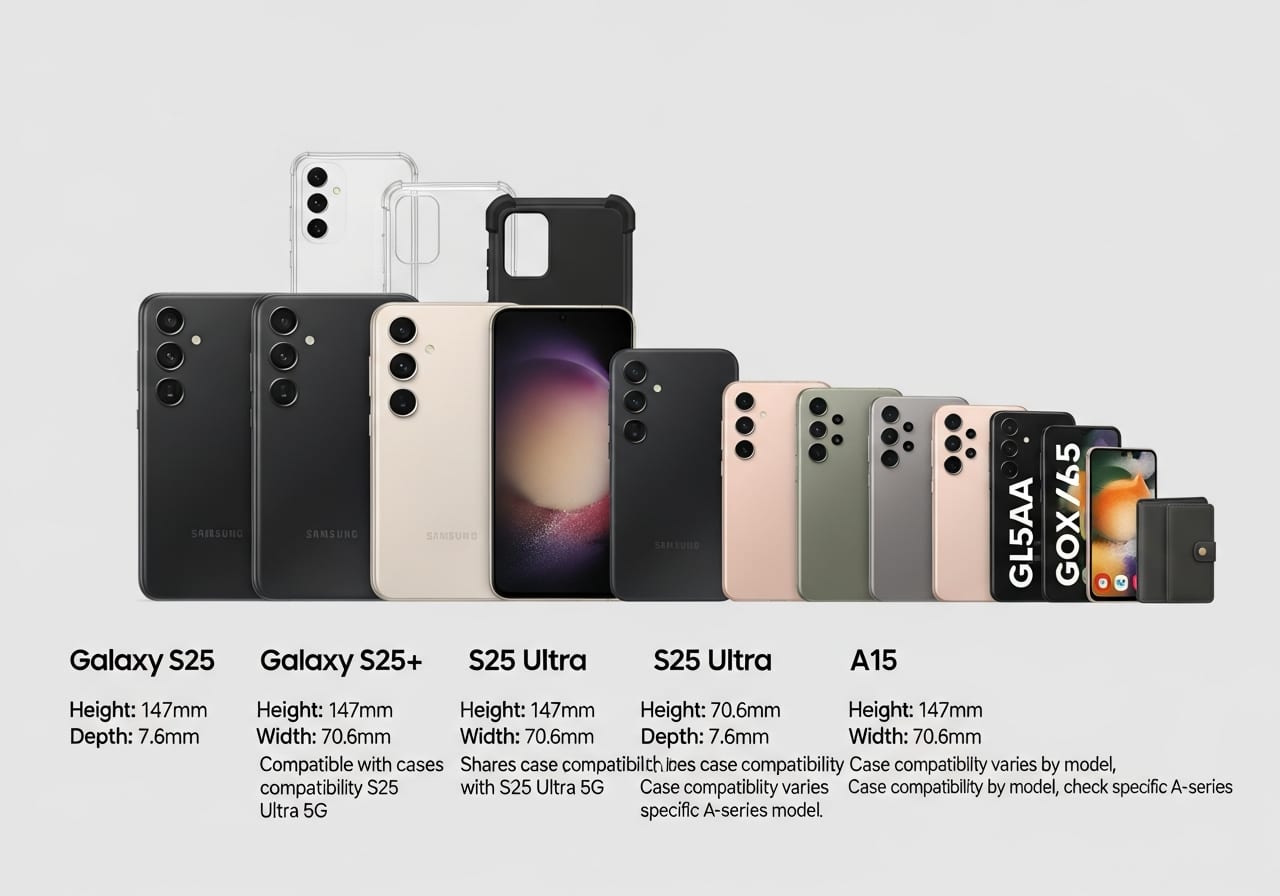
iPhone users need to navigate the differences between the standard, Plus, Pro, and Pro Max variants — each has different dimensions, camera bump configurations, and button placements. A case designed for the iPhone 15 Pro will not fit the iPhone 15 Pro Max, even though they're in the same generation. Samsung Galaxy users face similar fragmentation across the S-series, A-series, and Z-series folds and flips.
When shopping for a pokemon card phone case, verify compatibility at the specific model level, not just the brand or generation. Check that the case accounts for:
* Camera cutout precision: The camera bump on modern iPhones and Samsung flagships is large and complex. An imprecise cutout either blocks part of the camera or leaves a gap that allows dust and debris to enter. * Button and port access: All buttons (volume, power, mute switch on iPhone) and ports (USB-C, speaker grills) should be fully accessible without removing the case. * Screen lip height: The front edge of the case should extend slightly above the screen surface (called a "lip" or "bezel") to protect the screen when placed face-down.
[SuprPetrix's collection](https://suprpetrix.com/collections/phone-cases) covers a wide range of current iPhone and Samsung Galaxy models, with precision-molded cases for each specific variant. If you're unsure whether your model is supported, the product pages include detailed compatibility information.
MagSafe Support — Snap-On Convenience
If you're an iPhone 12 or later user, MagSafe compatibility is a feature you don't want to overlook. Apple's MagSafe ecosystem uses a ring of magnets embedded in the iPhone chassis to enable snap-on charging, accessories, and wallets. A MagSafe-compatible case maintains the alignment and strength of these magnets, allowing you to use MagSafe chargers, car mounts, and other accessories without removing your case.
For a card display phone case, MagSafe compatibility requires careful engineering. The card slot and the MagSafe magnet ring need to coexist without interfering with each other. A poorly designed case might position the card slot directly over the magnet ring, weakening the magnetic connection or causing the card to shift when a MagSafe accessory snaps on.
Quality MagSafe-compatible card cases solve this by positioning the card slot above or below the magnet ring, or by using a design where the magnets are embedded in the case frame itself rather than relying solely on the phone's magnets. This ensures full MagSafe functionality — fast wireless charging, strong accessory attachment, and accurate alignment — while keeping your card securely displayed.
For Android users on Samsung or other platforms, look for cases that support Qi wireless charging. While Samsung doesn't have a proprietary snap-on ecosystem equivalent to MagSafe, Qi wireless charging is a standard feature that your case should not block.
Protection Level — Drop Test & Edge Coverage
Let's be clear: a pokemon card phone case is first and foremost a phone case. The card display feature is a brilliant addition, but it cannot come at the expense of actual phone protection. Your phone is worth several hundred dollars, and no card display feature is worth compromising its safety.
Evaluate protection level across these dimensions:
* Drop protection rating: Look for cases that have been tested to military-grade drop standards (MIL-STD-810G) or that specify a drop protection height. A case that can survive a 6-foot drop onto concrete is meaningfully different from one that can handle a 3-foot drop onto carpet. * Corner reinforcement: Corners are the most vulnerable point in a drop impact. Quality cases use shock-absorbing TPU at the corners, often with air cushion technology that compresses on impact to dissipate force before it reaches the phone. * Raised edges: The case should have raised edges around both the camera module (to prevent scratching when placed face-up on a surface) and the screen (to prevent screen contact when placed face-down). * Back panel rigidity: The back panel needs to be rigid enough to protect against flat-surface impacts but not so rigid that it shatters on impact. A hybrid design — rigid PC back with flexible TPU bumper — is generally the optimal combination. * Card security during drops: This is specific to card display cases. The card slot should have a secure retention mechanism that prevents the card from flying out during a drop. Some cases use a friction-fit slot; higher-end cases use a locking mechanism or a secondary clear panel that snaps over the card.
Don't assume that a case with a card slot is necessarily weaker than a standard case. Well-engineered card display cases integrate the card slot into the structural design of the case, using it as a design element rather than a structural weakness.
SuprPetrix vs Other Brands — Honest Comparison
The trading card phone case market has grown significantly, and there are now multiple brands competing for collector dollars. Here's an honest look at how SuprPetrix stacks up against the competition.
Feature-by-Feature Comparison Table
The following comparison covers the key features that matter most to serious TCG collectors, based on publicly available product information and verified user feedback.
* Anti-Yellowing Guarantee: SuprPetrix offers a documented "Crystal Clear for 12+ Months" commitment using UV-stabilized materials. Most generic Amazon brands make no yellowing claims whatsoever. A small number of competitors claim "anti-yellowing" without specifying a timeframe or the material technology used. * Card Slot Design: SuprPetrix uses a precision-tolerance slot engineered to standard TCG card dimensions (63mm x 88mm) with sleeve compatibility. Generic cases often have oversized slots that allow card movement, or undersized slots that damage card edges. * Optical Clarity: SuprPetrix uses optical-grade transparent materials with true color rendering. Budget competitors frequently use standard-grade polycarbonate with visible haze or color cast. * MagSafe Compatibility: SuprPetrix iPhone cases are engineered for full MagSafe compatibility with proper magnet ring positioning. Many competitors either don't support MagSafe or position the card slot in a way that interferes with magnetic alignment. * Drop Protection: SuprPetrix cases feature reinforced corner protection and raised camera and screen edges. Budget cases often sacrifice protection thickness to keep overall case profile thin. * Model Range: SuprPetrix covers current-generation iPhone and Samsung Galaxy models with model-specific precision molding. Some competitors offer only a few models or use a "fits multiple models" approach that compromises fit quality. * Price Point: SuprPetrix cases are priced in the mid-range — higher than the cheapest Amazon generics, but significantly less than luxury fashion phone cases. For the feature set delivered, the value proposition is strong. * Brand Accountability: SuprPetrix is a dedicated TCG accessories brand with a collector-focused identity and customer support. Many cheap card cases are sold by generic electronics accessories sellers with no TCG expertise or accountability.
The honest summary: if you're comparing on price alone, you can find cheaper card phone cases. But if you're comparing on the features that actually matter for protecting your cards and maintaining display quality over time, SuprPetrix leads the market in anti-yellowing technology, card slot engineering, and collector-specific design.
What Real Users Say (Reddit & Amazon Reviews)
Collector communities are brutally honest, and the feedback on card display cases across Reddit's r/PokemonTCG, r/mtg, and various TCG Discord servers reveals consistent patterns.
The most common complaint about generic card phone cases, appearing repeatedly across Reddit threads and Amazon review sections, is yellowing. Users report that cheap cases begin showing visible yellowing within 60 to 90 days of regular use. "It looked great for the first month, then turned completely yellow by summer," is a representative comment that appears in countless variations. "Completely ruined the display effect and made my card look dirty even though it was in perfect condition."
The second most common complaint is card fit. "The slot is way too loose and my card slides around constantly" and "had to force my card in and now the edges are worn" are both frequently cited issues with budget cases.
SuprPetrix users, by contrast, consistently highlight the long-term clarity as the standout feature. Reviews from users six months to a year into ownership frequently mention that the case "still looks brand new" and "hasn't yellowed at all." The card slot fit is also frequently praised: "slides in and out perfectly, even with a sleeve on," and "my card stays exactly where I put it, no shifting."
From competitive players on Reddit, there's a recurring theme of using the card case as a confidence ritual — displaying their signature deck's key card during tournaments. Multiple posts in r/PokemonTCG have featured SuprPetrix cases in deck reveal photos and tournament coverage, contributing to organic brand awareness within the community.
Gift buyers on Amazon frequently mention the unboxing experience and the reaction from the recipient. "My son is obsessed with Pokemon and he absolutely loved it — he immediately put his favorite Pikachu card in it and hasn't taken it off his phone since" is representative of the gift buyer segment's feedback.
Compatible with Every TCG Card You Own
One of the most underappreciated features of a quality card display phone case is its versatility across the entire trading card game ecosystem. Pokemon may be the most popular TCG globally, but collectors rarely limit themselves to a single game. The standard card dimensions used across most major TCGs mean that a well-designed case becomes a universal display platform for your entire collection.
Pokemon / MTG / Yu-Gi-Oh / Sports Cards
Pokemon TCG: The natural home for a pokemon card phone case. Standard Pokemon cards measure 63mm x 88mm, fitting perfectly in a standard TCG-sized slot.
The variety of display options is extraordinary — from vintage Base Set holos to modern Full Art and Special Illustration Rares from the Scarlet & Violet era. Collectors often rotate their displayed card to match the current competitive meta, a new set release, or simply their mood. Seasonal displays are popular: a Ninetales or Vulpix card for autumn, a Glaceon or Alolan Sandslash for winter, a Leafeon for spring.
Magic: The Gathering: MTG cards share the same 63mm x 88mm standard dimensions as Pokemon cards, making them a perfect fit. The MTG community has a strong overlap with Pokemon collectors, and many dual-hobby enthusiasts love being able to display their favorite Commander, their most prized foil, or a card with particularly stunning artwork — think the borderless and extended-art treatments from recent sets like March of the Machine or The Lord of the Rings. A Black Lotus proxy for the lore-lovers, a foil Liliana for the Planeswalker fans, or a showcase land for the art appreciators — the display possibilities are endless.
Yu-Gi-Oh: Yu-Gi-Oh cards are slightly smaller than standard TCG size at 59mm x 86mm, but they fit comfortably within a standard TCG card slot with a small amount of play. For collectors who want a tighter fit, sleeving the Yu-Gi-Oh card in a standard penny sleeve brings it to standard TCG dimensions. The Yu-Gi-Oh community has produced some of the most visually striking card artwork in the hobby, from classic Blue-Eyes White Dragon to modern Secret Rare and Quarter Century Secret Rare treatments. Displaying a Ghost Rare or a Prismatic Secret Rare in a crystal-clear case is a flex that any Duelist will appreciate.
Sports Cards: Standard sports cards — including modern NBA, NFL, MLB, and NHL cards from major manufacturers like Panini and Topps — are produced in the standard 63mm x 88mm format, making them compatible with TCG card display cases. The sports card hobby experienced its own boom concurrent with the Pokemon TCG surge, and many collectors now straddle both worlds. Displaying a rookie card, a numbered parallel, or a patch auto in a card display phone case is a growing trend in the sports card community. The anti-yellowing technology is particularly relevant here, as sports cards can carry significant monetary value and collectors are appropriately protective of condition.
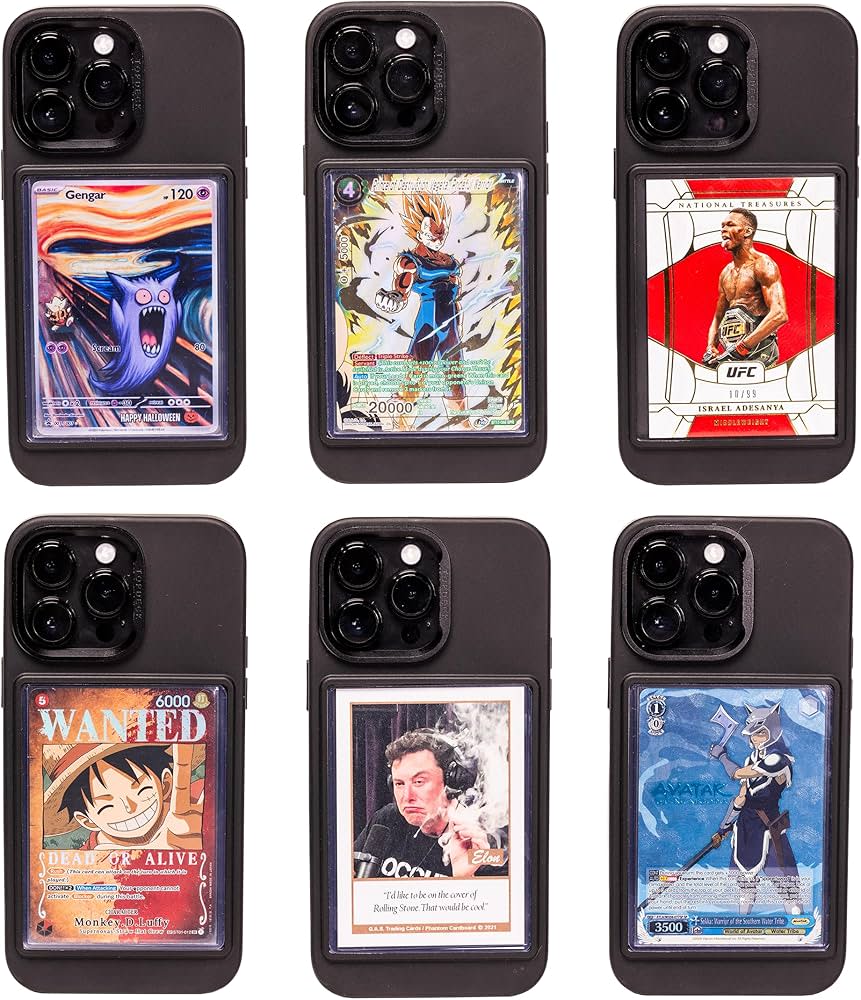
Other TCGs and Collectibles: The standard 63mm x 88mm format is used across many other collectible card games, including Dragon Ball Super Card Game, Flesh and Blood, Digimon Card Game, and One Piece Card Game. The explosion of anime-based TCGs in recent years has brought a new wave of collectors into the hobby, many of whom are looking for display solutions that match the quality of their collections. Any card in standard TCG format will display beautifully in a [SuprPetrix card display case](https://suprpetrix.com/collections/phone-cases).
The universal compatibility of a quality trading card phone case transforms it from a single-purpose novelty into a versatile collector's tool. Your case becomes a rotating gallery that can showcase the best of your entire collection, regardless of which game or sport the card comes from. That versatility significantly increases the value proposition of investing in a high-quality case.
FAQ
The following frequently asked questions cover the most common concerns from collectors considering a pokemon card phone case purchase.
Q: Will a Pokemon card phone case damage my card?
A: A well-engineered card display phone case should not damage your card in any way. The key is choosing a case with a precision-tolerance card slot that fits standard TCG dimensions (63mm x 88mm) without being too tight or too loose. SuprPetrix cases are specifically designed to allow smooth card insertion and removal without causing edge wear, corner damage, or surface scratches. For extra protection, you can insert your card in a standard penny sleeve before placing it in the case — quality cases accommodate sleeved cards.
Q: How long before the case starts to yellow?
A: This depends entirely on the quality of the case. Cheap cases made from standard polycarbonate or low-grade TPU can begin yellowing within 60 to 90 days. SuprPetrix cases use UV-stabilized, anti-yellowing materials and are backed by a "Crystal Clear for 12+ Months" guarantee. The anti-yellowing properties are built into the material itself, not applied as a surface coating, so they don't wear off over time.
Q: Can I use a card display phone case with MagSafe?
A: Yes, if the case is specifically engineered for MagSafe compatibility. SuprPetrix iPhone cases for MagSafe-compatible models (iPhone 12 and later) are designed with proper magnet ring positioning that maintains full MagSafe functionality, including fast wireless charging and snap-on accessory attachment. Always verify MagSafe compatibility before purchasing, as not all card display cases support it.
Q: What card size fits in a Pokemon card phone case?
A: Standard TCG cards measuring 63mm x 88mm (2.5" x 3.5") fit in a standard trading card phone case. This includes Pokemon TCG cards, Magic: The Gathering cards, Dragon Ball Super cards, sports cards, and many other TCG formats. Yu-Gi-Oh cards (59mm x 86mm) are slightly smaller but fit with a penny sleeve. Oversized cards, jumbo cards, and graded slabs will not fit in a standard card slot.
Q: Can I put a graded card (PSA, BGS) in a phone case?
A: No. Graded cards in PSA, BGS, or CGC slabs are significantly thicker and larger than standard card dimensions and will not fit in a standard card display phone case. If you want to display a graded card, consider removing the raw card from the slab — but this is a decision with significant value implications that should be made carefully. Most collectors display a duplicate raw copy of their graded cards in their phone case.
Q: How do I clean a Pokemon card phone case?
A: Remove the card first. Clean the case with a slightly damp microfiber cloth. Avoid harsh chemical cleaners, alcohol wipes, or abrasive materials, as these can damage the transparent panel and accelerate yellowing even in high-quality cases. For the card slot interior, a dry cotton swab can remove dust and debris. Regular cleaning prevents the buildup of oils and particles that can scratch the card surface.
Q: Are these cases compatible with wireless charging?
A: Yes. SuprPetrix card display cases are compatible with Qi wireless charging. The case materials do not block wireless charging signals. MagSafe-compatible models also support the full MagSafe charging speed (15W for MagSafe chargers on supported iPhone models).
Q: How often can I swap cards?
A: You can swap cards as frequently as you like, provided you do so carefully. The card slot is designed for repeated use without degrading in holding strength or causing card damage. Many collectors swap cards weekly or even daily, matching their displayed card to their current mood, favorite set, or competitive focus. Using a penny sleeve on your card during swaps provides an extra layer of protection against edge wear from repeated insertion and removal.
Q: Is a Pokemon card phone case a good gift for a collector?
A: It's one of the best gifts you can give a TCG collector. It's practical, personal, and shows that you understand their hobby. The key is getting the right phone model — make sure you know exactly which iPhone or Samsung model the recipient uses before purchasing. A [SuprPetrix card display case](https://suprpetrix.com/collections/phone-cases) makes an excellent birthday, holiday, or tournament congratulations gift for any TCG enthusiast.
Q: What makes SuprPetrix different from generic card phone cases on Amazon?
A: The primary differentiators are anti-yellowing technology, card slot engineering, and brand accountability. Generic Amazon cases are typically made from standard materials with no yellowing resistance and imprecise card slot tolerances. SuprPetrix is a dedicated TCG accessories brand that has engineered its cases specifically for the needs of serious collectors, with UV-stabilized materials, precision card slots, and a documented 12+ month clarity guarantee. The difference is visible after six months of use.
Shop by Model
Ready to find the perfect pokemon card phone case for your phone? SuprPetrix offers collector-grade card display cases for the most popular current smartphone models. Every case in the collection features UV-stabilized anti-yellowing materials, precision TCG card slots, raised edge protection, and model-specific precision molding.
Browse the full collection at [suprpetrix.com/collections/phone-cases](https://suprpetrix.com/collections/phone-cases) and filter by your phone model to find your perfect case. Each product page includes detailed specifications, compatibility information, and real customer reviews from collectors who have been using their cases in the field.
Whether you're an iPhone user who needs MagSafe compatibility, a Samsung Galaxy user who wants the best Android option on the market, or you're buying a gift and need help navigating the options, the [SuprPetrix](https://suprpetrix.com) product team is collector-focused and ready to help.
Here's a quick reference for the most popular models currently in the collection:
* iPhone 16 Pro Max / 16 Pro / 16 Plus / 16 — Full MagSafe compatibility, precision camera cutout for the new camera control button, reinforced titanium-inspired corner design. * iPhone 15 Pro Max / 15 Pro / 15 Plus / 15 — MagSafe compatible, USB-C port access, raised Dynamic Island protection. * iPhone 14 Pro Max / 14 Pro / 14 Plus / 14 — MagSafe compatible, full camera island cutout, action button ready on Pro models. * iPhone 13 Series — MagSafe compatible, notch-era design, full button and port access. * Samsung Galaxy S25 Ultra / S25+ / S25 — Qi wireless charging compatible, precision S-Pen slot access on Ultra, full camera array cutout. * Samsung Galaxy S24 Series — Qi wireless charging, titanium frame-matching design, full button access. * Samsung Galaxy S23 Series — Qi wireless charging, full compatibility with Samsung DeX accessories.
Don't see your model listed? [Visit the full collection page](https://suprpetrix.com/collections/phone-cases) for the complete and up-to-date model lineup. SuprPetrix regularly adds new models as new smartphones launch, prioritizing the models most popular in the TC


