

Welcome, elite collectors and strategists, to the Suprpetrix Grading Dojo! When you're dealing with cards that could fund a real-life Pokémon journey, understanding the subtle language of professional grading isn't just useful—it's critical. The difference between a PSA 10 and a BGS 9.5 can be thousands of dollars. Let's pull out our jeweler's loupes and decode the "big three" grading titans: PSA, BGS (Beckett), and CGC.
The Arena: PSA, BGS, and CGC Face Off
Think of grading companies as different Gym Leaders, each with their own specialty and challenge.
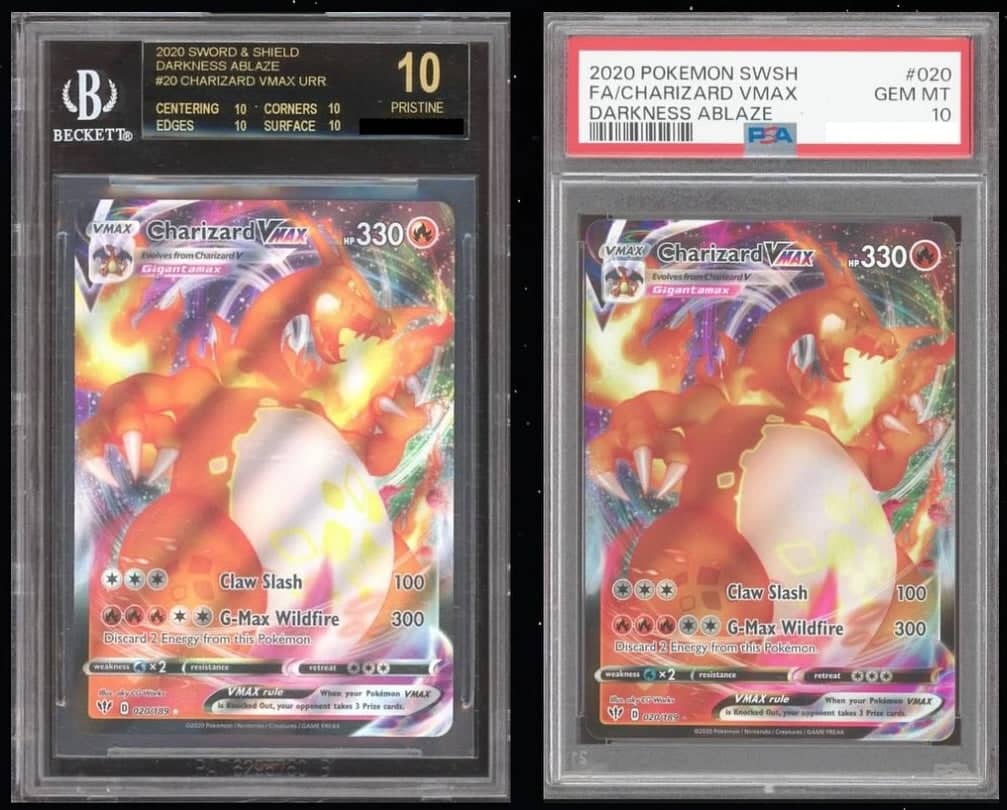
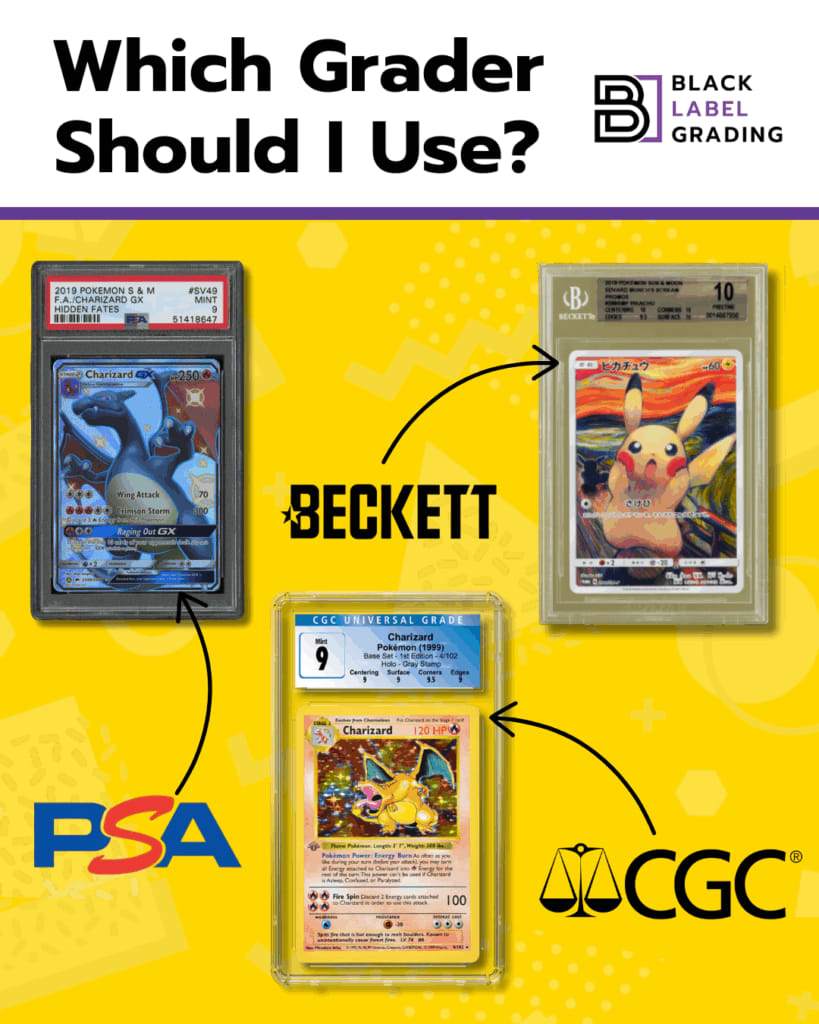
PSA (Professional Sports Authenticator): The indisputable champion of the marketplace. PSA's iconic blue label is the global standard for liquidity and value. Their strength is a straightforward, holistic grade (1-10) that the market universally trusts.
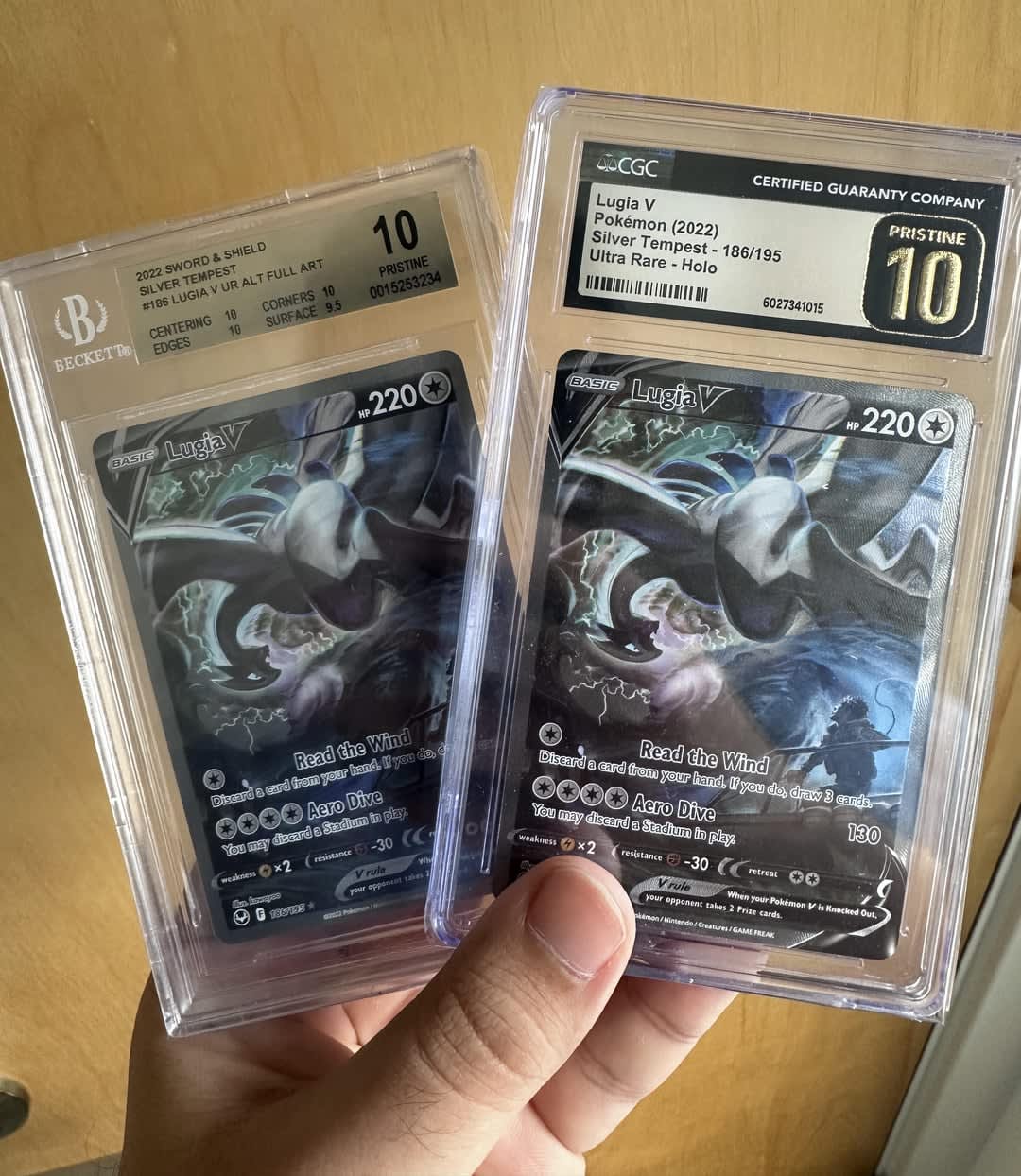
BGS (Beckett Grading Services): The precision technician. Beckett is famous for its sub-grades (Surface, Edges, Corners, Centering) and its coveted "Black Label" Pristine 10. BGS appeals to those who want a detailed report card on their card's condition.
CGC (Certified Collectibles Group): The sharp new challenger. Entering the TCG space with a renowned reputation for comics, CGC is known for strict, consistent standards and slightly more affordable pricing. They offer sub-grades like BGS and are quickly gaining market trust.
The Scoring System: A Tale of Two Philosophies
The PSA Philosophy: The "Overall Impression"
PSA looks at the card as a whole. While they assess the same four categories, the final grade is not a mathematical average. It's a final judgment where the worst flaw often dictates the ceiling.
A PSA 10 (Gem Mint) is "virtually perfect." It allows for a minuscule flaw—an imperceptibly soft corner or the tiniest printing speck—that might not be noticed without intense scrutiny.
The PSA 9 (Mint) "has a slight defect." This is where most "pack-fresh" cards actually land, often due to slightly off-centering or a faint print line.
The BGS & CGC Philosophy: The "Sub-Grade Breakdown"
Both BGS and CGC provide a transparent 1-10 score for each of the four key categories:
-
Centering: Measured with near-scientific precision (e.g.
(e.g., 55/45 front, 60/40 back).
-
Corners: Sharpness and wear. -
Edges: Whitening, dings, or irregularities. -
Surface: Scratches, print defects, gloss.
Here’s the strategic difference:
BGS 10 (Pristine "Black Label"): Requires four sub-grades of 10. This is the absolute pinnacle, rarer than a holographic Charizard. A single 9.5 sub-grade knocks it to a Gold Label BGS 10.
BGS 9.5 (Gem Mint): The final grade is the lowest sub-grade. So a card with three 10s and one 9.5 gets a 9.5 overall. This makes BGS 9.5s highly desirable and consistent.
CGC 10 (Pristine): Similar to BGS Black Label, it requires perfect 10 sub-grades. Their CGC 9.5 (Gem Mint) is also very strict, often comparable in quality to a PSA 10.
The "Gem Mint" Gauntlet: A Category-by-Category Showdown
Let’s break down what each titan demands for their top grades.
| Grading Category | PSA 10 (Gem Mint) Expectation | BGS 10 (Pristine) / CGC 10 (Pristine) Expectation | The Key Differentiator |
|---|---|---|---|
| Centering | Excellent. 55/45 front / 60/40 back is often acceptable. | Perfect or near-perfect. 50/50 to 55/45 is typically required. | BGS/CGC are stricter with rulers. PSA uses a more "eye test" approach. |
| Corners | Razor-sharp. No visible whitening under normal light. | Absolutely flawless under magnification. | BGS/CGC will downgrade for microscopic fiber tears invisible to the naked eye. |
| Edges | Clean. |
| Edges | Clean. No noticeable whitening or chipping. | Perfectly cut and clean. No manufacturing "burrs" or subtle irregularities. | BGS/CGC often penalize rough factory-cut edges more harshly. | | Surface | No major scratches or print defects. A minuscule print spot may pass. | Immaculate. Zero visible print lines, scratches, or texture flaws, even under bright light. | Surface is the #1 PSA 10 killer. A single visible print line often means a PSA 9. BGS/CGC are equally unforgiving here. |
Expert Strategy: Which Grader Should You Choose?
Your goal determines your Gym Leader.
-
Choose PSA if: You prioritize maximum resale value and market acceptance, especially for vintage or ultra-high-end modern cards. The PSA 10 is the king of the marketplace. -
Choose BGS if: You have a visually flawless modern card you believe can contend for a Black Label Pristine 10 (the ultimate trophy), or you want the detailed feedback of sub-grades. The BGS 9.5 is a mark of exceptional quality. -
Choose CGC if: You value strict consistency, detailed sub-grades, and cost-effectiveness. CGC is an excellent choice for grading modern "investment" slabs where you want confidence in the grade without the PSA premium.
Pro-Tip: Before submitting, "pre-grade" ruthlessly. Use a centering tool and a 30x loupe. If you see any print lines, slight edge wear, or off-centering beyond 55/45, expect a PSA 9 or BGS 9.5. Manage your expectations!
Protect Your Potential 10s from the Start.
Before you even think about grading, champion-level protection is non-negotiable. At Suprpetrix, we provide the foundation:
-
Archival-Quality, Anti-Yellowing Inner Sleeves: Prevent surface micro-scratches and chemical degradation from day one. -
Rigid Toploaders & Semi-Rigid Holders: Safely store and transport your submission candidates without a hint of bend or corner ding. -
Premium Binders for Raw Collections: Keep your ungraded treasures organized and safe while you build your submission batch.
Grade smart, protect smarter. Equip your collection with Suprpetrix.


